







“Solve all problems of life such as love, health, happiness, business, and finance. Reunite the separated. Unfold the mystery of past life. Interpret your dreams.” At 410 West 56th street, right across the street Home Depot, “Manhattan’s most gifted psychic,” Melanie can— according to the sign printed in comic sans outside her shop— sort out your life. “It’s part of my family’s gift. My grandmother, my mother, and me. We all have it. I’ve been doing it since I was eight years old. I’ve always felt things and have been able to read people.”
I found Melanie online. She had a single google review from a woman named Corrine Schloop which boasted five stars. I figured Corrine seemed like a pretty trustworthy gal, so I gave Melanie a call and—after learning that she charged only ten dollars for a palm reading (what a steal!)— scheduled an appointment..
My obsession for discovering the inner workings of my future began when I started watching Hollywood Medium, a reality TV show in which a twenty-something bleach blonde psychic talks to the dead relatives of B and C list celebrities. Pretty riveting stuff, I know. Despite the whole situation being unbelievably chiche, every single celebrity—from Snooki to RuPaul—left the session with a good cry and an entirely new outlook on life. With each passing episode, I found Tyler Henry, the Hollywood medium, rearranging every single cynical thought I’ve ever had about death. I too wanted a life altering, earth shattering, emotional breakdown inducing reading. I knew this was completely unrealistic (and also started becoming a huge waste of money right around psychic number four), but once I started, going to Lower Manhattan in search of my future became a regular occurance.

Despite what shows like Long Island and Hollywood Medium might lead you to believe, the idea of supernatural fortune tellers is hardly a new fad: the Ancient Greeks consulted the Oracle of Delphi, sixteenth-century royals turned to Nostradamus for political advice, the Egyptians used psychics in their royal court. And in the 21st century, a time when many are moving away from organized religion and toward a more DIY spirituality (suddenly all your white friends do yoga, have downloaded headspace, and dabble in Buddhism), the spiritual advisor market is becoming progressively less niche. Even the biggest skeptics have probably glanced curiously at horescopes.com to see what’s written in the stars on a given week or if they’re compatible with a partner (he’s a gemini, I’m a sagittarius. That’s why we’ve been fighting so much!) In fact, 15% of Americans claim to have visited a psychic. According to the U.S. Census Bureau, 9.6% of the US population have a masters degree. There are more people going to psychics in the United states than grad school: that’s a little jarring.
Although psychics have become trendy, “fortune telling” was banned in New York City in 1967. This law forces psychics to officially classify themselves as entertainers so they can get away with charging you $150 to tell you that your dog might be feeling some animosity about the new brand of kibble you’re feeding him. This law might also explain why finding a psychic on the Upper West Side who wouldn’t charge me hundreds of dollars or potentially sell me on the black market proved to be difficult. I figured I could call the first spiritual advisor that popped up on yelp, schedule an appointment, and call it a day. As it turns out, getting an appointment with a psychic in New York City is just as hard as getting a reservation at Mezzaluna on a Saturday night.
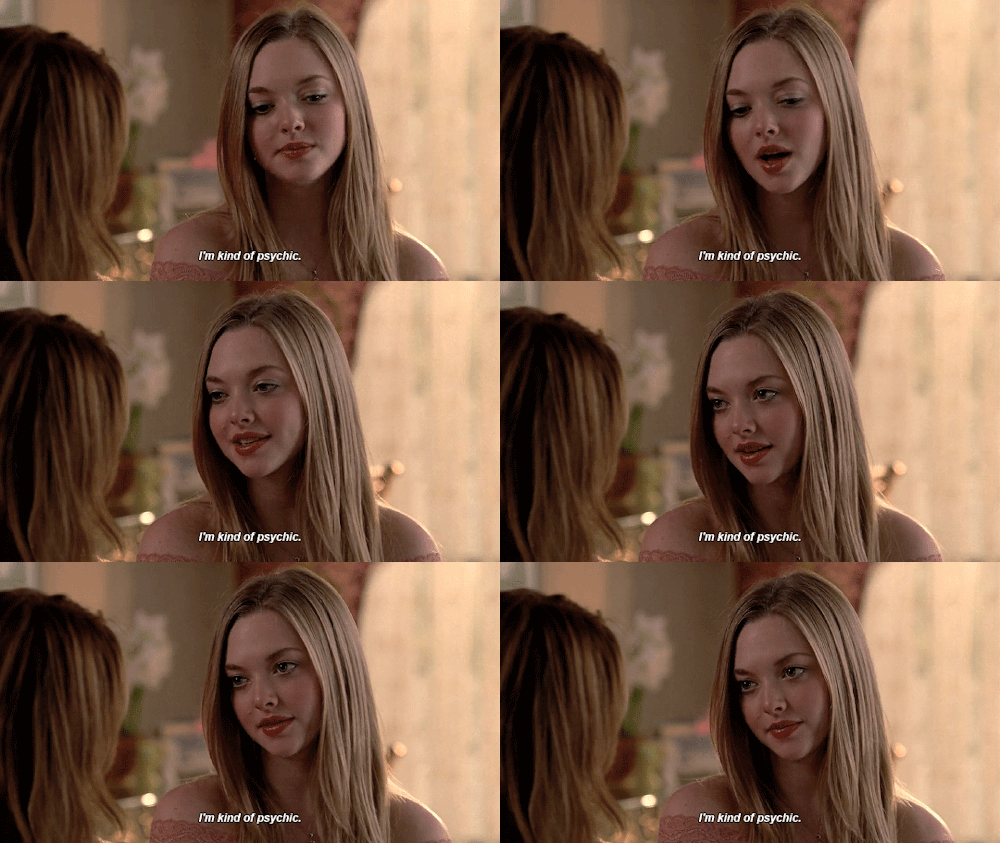
Psychics— I’ve learned— do not like to be called. Each woman I talked to approached the phone call with an accusatory, “Where did you find me?!” right off the bat. None of them would even confirm that they provide psychic services until about five minutes into the conversation when they had finished interrogating me about my intentions and probing into my life story (What’s your name? How old are you? Where did you find this number? Do you go to California often? I’m feeling a strong energy for you there.) After trying (and failing) to make an appointment with just about every spiritual advisor on the Upper West Side, I decided to just find one. This is New York City after all. If dermatologists and italian restaurants take walk-ins, psychics must too.
For about an hour and a half, me and my friend Anna, who was just as intrigued by the whole supernatural-beings-living-among-us-thing as I was, roamed the streets on the hunt for our futures. I began to feel like Goldilocks: the psychic on 76th street was too expensive, the psychic on 97th only did readings over the phone, and the psychic on 66th was too creepy (Come up to my apartment, I made gingerbread!) No thanks. We had just about reached the end of our rope and were mourning the loss of our potentially life altering reading when the stars finally aligned, mercury exited retrograde, and we found a psychic who was juuust right.

Melanie’s shop looks more like a display case than anything else. The space is tiny,— i’m talking elevator small—and an entire wall of the room is a window that proudly displays Melanie, perched on her fake gold throne, a white fur shawl wrapped elegantly around her shoulders, unmoving as a trophy in a trophy case. If her objective was to entice onlookers on the street with the mysteries of the divine, she succeeded. Melanie doesn’t have a website, nor does she have any kind of significant advertising besides the flyers she hands out at the end of readings. She doesn’t need any of that because she is the advertisement: her whole setup is weird and picturesque and enticing. You can’t walk by the shop without stopping for a few seconds to take it all in.
Initially, the inside looks pretty hoeky: fake gold plastic chairs, a small table covered with candles, cheap looking tarot cards with the lamination peeling off, and twenty or so multicolored rocks, some of which have prices taped to them (70 dollars for a pink rock, 95 dollars for a dark purple rock) are all crammed into the small space.
As though she was reading from a script, Melanie begins to rattle off her rates, “It’s seventy five for a tarot reading, fifty for an astrological reading, twenty five for two palms, and ten for one palm. The tarot reading is very good. Tells you about your past, present, and future, soulmate, career, finance.”
I give Melanie my right palm and ten dollars and a sort of sinking feeling enters me; sitting on a plastic gold chair surrounded by astrological knick knacks and fake candles, I’m suddenly very aware of the ridiculousness of it all. The whole mystical being thing Melanie had going on from the outside of her shop fades away the second you walk in and see it for what it is—an elaborate performance.
She examines my hand as I question my common sense skills and contemplate the life choices that led me to this moment. Sure, the reading will make for an interesting article but what about all the psychics I went to before Melanie? I tend to consider myself a pretty level-headed person: when kids in the third grade said they wanted to be rockstars or the next Lebron James, I went to more conservative route and dreamed of being a real estate broker. How then have I let myself buy into such an implausible concept: that a woman who rents out a four by six space on 56th street can—by some divine nature— predict my future and speak to my dead relatives.
“You are born to be a leader, not a follower.”
I internally roll my eyes—who isn’t.
“You’re very artistic, very creative, you love music.”
Oh my god I was wrong. She totally knows me. I can’t believe I ever doubted her. Then I catch myself. This is New York City; every teenage girl is creative and loves music. Calm down.
“You always set goals with specific dates and times and if you don’t achieve them by that time you feel like you failed. You’re very hard on yourself. Your biggest fear is stopping for a moment and not being productive. You think if you do that everything you’ve worked for will come crashing down.”
Anna starts nervously laughing at how accurate the reading is as my eyes widen and my even-keeled internal monologue short circuits: that is so me. She continues to tell me that I’ll meet my soulmate in my second year of college, that six is my lucky number, and that I’ll have a boyfriend named Alex in April. This all sounds pretty good to me, so I give Melanie another 15 dollars for her to read my other palm.
“You can ask me one question about your future.”

The room is silent save for the buzzing noise of her radiator as I think. I rummage through my brain in search of my most confused, unsettling, and embarrassing thoughts. I know she won’t give me advice or talk about her personal experiences. She’s also won’t have an agenda like the people in my life who I usually confide in. I will get a yes or no. It’s freeing in a way; to know that I can ask this woman anything about my future without the fear of judgment looming over my head.
“Will I be happy with the choices I have about where I can go to college?”
“Yes. You will definitely get what you want and be satisfied.”
There it is. That’s the moment all us spiritual seekers are looking for. There’s a common misconception about the type of person who goes to a psychic. All this time, I thought psychics were for hippie-vegans (like myself) with poor judgment skills and money to burn. I was sorely mistaken. People who go to psychics are quite the opposite: they’re total control freaks. Who else but the neurotic, overworked, and over obsessive would want to micromanage not just their present but their future?
Just months after the financial meltdown of 2008, unemployed New Yorkers were flocking to psychics, using the little money they had to find out whether they’d be getting that job they applied for, and whether fortunes would be more favorable for them in the near future. When things seem uncertain, psychics thrive. In fact, people often use psychics instead of therapists. Psychics won’t judge you. Nor will they record your progress and assign you strategies to better yourself. Rather than shelling out some cash for someone to tell you what might help better your life, you can shell out the same amount for someone to tell not how but when things will start to pick up. In an era of constant information, we crave knowledge now. Immediate gratification is all we know. We’ve become accustomed to constantly receiving information (we know what Trump said at his latest press conference five minutes after he said it, and we know when Maggie from highschool gets engaged on facebook, despite not having spoken to her since freshman year math class.) It makes sense then, that we feel out of sorts when confronted with the unknown. Why shouldn’t we know the gender of our non-existent children or when we’ll meet our soulmate.
Like chocolate and alcohol, going to psychics in moderation is harmless. Spending ten dollars or so every few months to hear someone else tell you about you is no big deal. There is, as with chocolate and alcohol, always a catch. Breakouts and hangovers are the price you pay for some really good cake or a really fun night. A loss of autonomy (and money) is the price you pay for a judgment free fifteen minutes and a great story. After our reading, Melanie gravley told Anna that she had bad luck and needed to buy a $90 crystal to cleanse her aura. I knew this was preposterous, but upon hearing this, Anna stepped out to the ATM on 55th street, withdrew $90, and indulged in some aura pampering. Within ten minutes, my level headed, skeptical friend decided that her fate was not up to her but up to a stranger and an (admittedly really cool looking) rock.
Humans are afraid of judgment, and yet day after day we give advice, take advice, gossip and get gossiped about. It’s exhausting. What’s appealing about Melanie’s tiny psychic shop on the corner of 56th and 7th is that there’s no judgment in asking and believing. You want to meet your future husband? Fine. You want to know if you were a Native American tribe leader in a past life or if your dead cat is sending you messages from the beyond in the patterns your cereal makes in a bowl of milk? No problem. Melanie’s shop is the kind of place where you will see a wall street man, briefcase in hand, trying to uncover repressed grief for his deceased uncle by way of a middle aged woman with a couple of pretty rocks— and spend $200 to do it.
Ah minimalism. This non-execs trend takes its shape in restaurants, on social media, and recently, in branding. For many millennials and Gen-Zers, the proper use of this trend can make or break a brand. I can’t tell you the number of times I’ve come across a store or website and wanted to buy a product simply because I thought the succulents in the window were really cute or because the number of products displayed was aesthetically pleasing and approachable (think reformation, The Beauty Chef, and herbivore)

Gone are the days when a great shopping expirence simply meant the store had a lot of cute clothes; never have I ever been excited to face the trauma that is the piles upon piles of clothes (not to mention long lines) at stores like Zara, LF, Bloomingdales, etc. While I often find some of my favorite pieces at these hell-hole retailers, I’m also often reluctant to enter these stores to begin with (“can’t we just walk around Tribeca and go to the cute little shops with the essential oils instead?”)
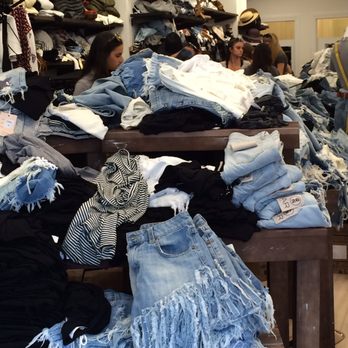
Enduring these blood-pressure raising shopping experiences takes a lot out of me. Even if I’m with my best friends, massive stores always make me weirdly depressed: sifting through an abyss of never-ending fabrics for some semblance of hope in the form of a blazer or some cool track pants kind of kills the joy of shopping.
Enter retailers like glossier, Solid and Striped, and Dreams on Air. These brands are not only aesthetically pleasing (I love me some white walls, natural lighting, and green plant accents), but also impeccably edited. Although the selection isn’t as vast, the products these stores carry feel— for the most part— unique (or at least it seems that way because your eyes haven’t glazed over from looking at racks and racks of patterned pants that all look identical). They gain individuality and a certain quality of specialness because you’re not comparing them to a hundred other pieces in the vacinity that more or less do the same thing for you.

Gen-Zers stare at beautifully (and meticulously) edited content day in and day out. Apps like facetune (don’t judge me), VSCO, Perfect 365, etc. have conditioned us to believe that perfection is not just normal, but necessary for social acceptance. If brands want to keep up with us, they need to edit and refine (and for the love of god give us succulents!)


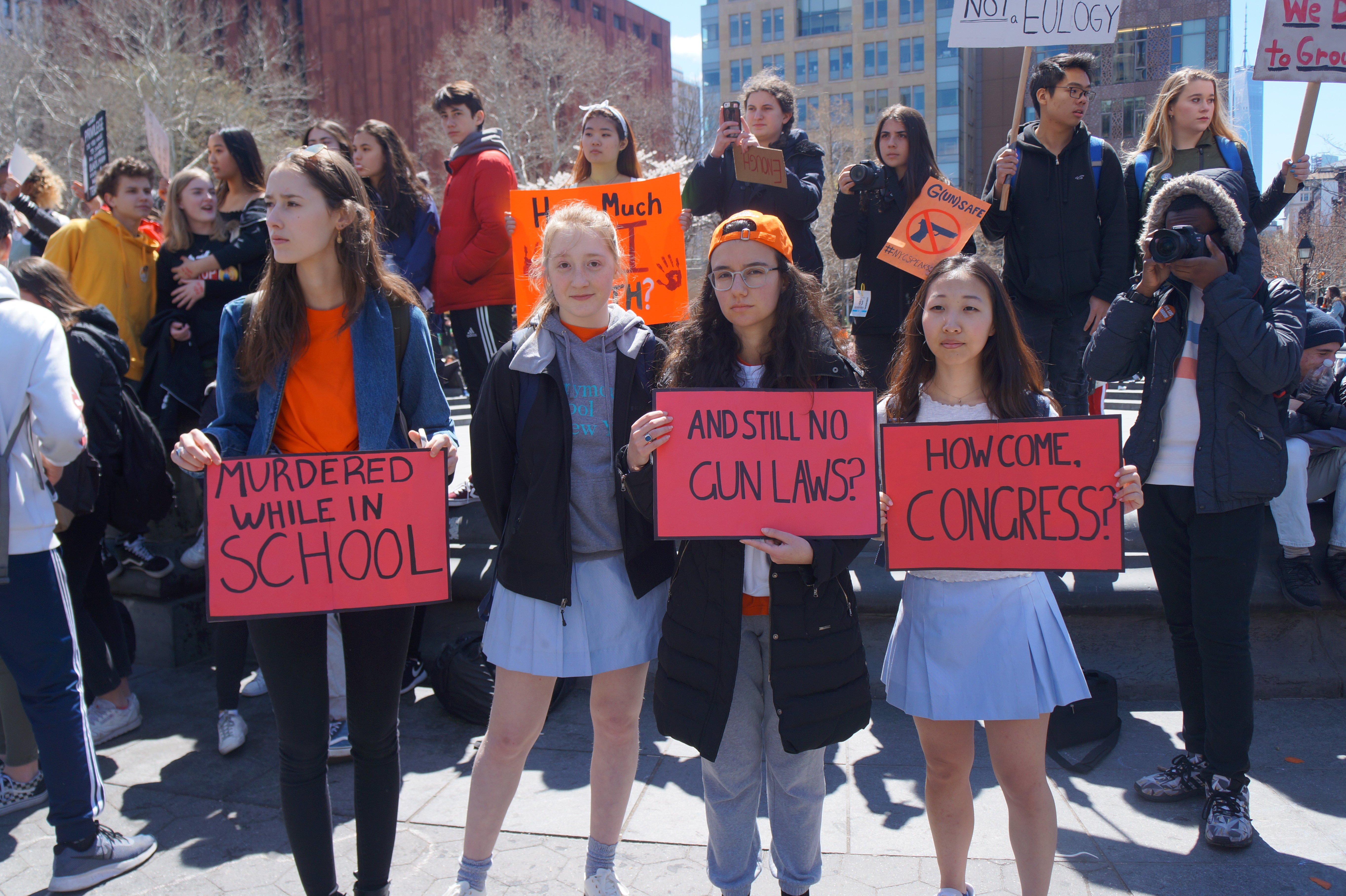



Our country has experienced a revolution of sorts; now more than ever before, cases of sexual assault are being brought to the forefront of American society. Issues of misconduct have seeped their way into Hollywood, politics, and— perhaps less obviously— our schools.
Brett Kavanaugh, who was recently approved to serve as a justice on the U.S. Supreme Court, attended the prestigious Georgetown Preparatory School as well as Yale Law School. These two schools have much in common: they’re both elite, expensive institutions that breed privilege as well as a culture which can make students feel as though their status puts them above the law. Perhaps not coincidentaly, at both institutions, Brett Kavanaugh was accused of sexual assault and misconduct by multiple women.

Most notably, Dr. Christine Ford testified to the Senate and recounted her experience in front of politicians and America. Regardless of whether you believe Dr. Ford’s testimony, one thing remains clear: sexual assault and the culture that accompanies it is alive and well within elite schools. Yale News reports that Ivy League schools were found to have higher rates of sexual assault than the average college or university. Paulina Bahary, a senior at Cornell, stated, “I see manifestations of rape culture almost every day in my school community. This isn’t specific to solely Cornell, but present in every privileged, ‘elite’ institution that I have attended [Fieldston and Emory]. Slut shaming, victim blaming, cohesion, and a misunderstanding of consent and the word ‘no’ is commonplace. I think that among white, wealthy men in particular, there is a common, overarching feeling of being entitled, untouchable, and of more importance and value than subordinate groups.”
On a similar note, the University of Southern California, one of the most prestigious colleges in the country, made headlines when a school gynecologist was accused by over 100 women of sexual assault during his thirty year career at the university. His long career was not a product of a lack of complaints by his victims, but rather USC’s blatant disregard for the victims’ accusations. A comparable case occurred at Stanford when Brock Turner, a student and valued member of the swim team, was convicted of assaulting an unconscious woman and was given a mere six month jail sentence, which many felt was inadequet.
Transparency and education surrounding sexual assault contribute to its prevalence. Elite institutions want to have spotless reputations; discussing these issues as directly impacting their school community mars the institution’s facade. highschool Junior Imani Camara stated, “The failure to educate teens and openly talk about these issues makes getting away with assault easier. Change begins and ends with education.”

High school and college students are most threatened by this epidemic: the National Center for Victims of Crime reports that 80% of rape victims experienced their first rape before the age of 25, and 42% before the age of 18. If our students are most at risk, why they have some of the most prestigious schools in the country fallen short in addressing the problem? highschool Junior Jacyn Daniels stated, “Elite schools often consider if the family of the perpetrator donates money to the school. If that is the case, they look past the morality of the situation and sweep it under the rug.” Senior Xander Luke-Mallett agreed, stating, “Although rape culture is perpetuated through all socioeconomic strata, it is definitely more prevalent amongst the elite.”
In a highly publicized recent case at Columbia University, a male student whose parent served on the Board of Trustees was allowed to remain enrolled and graduate despite credible accusations of sexual assult by multiple female students. Although parental donation may play the most significant role in fostering rape culture within a school itself, if the case is brought to court, the judicial system contributes in skewing the outcome at the state level. Cornell senior Paulina Bahary, who worked at the New York District Attorney’s office in the domestic violence precinct, explained, “I was glad to see that the law is interpreted and applied in the same way for all perpetrators, regardless of race and background. I met over 50 prosecutors, and I can say with certainty that none of them would pursue a case a certain way based on a defendant’s identifiers. Regardless, there are other functioning systems at play. The most prevalent manifestation of inequality is the extent to which money affects your relationship with the criminal justice system. This isn’t because you will be favored by prosecutors because you have money, but rather, because you have access to more expensive, competent attorneys who will do a better job of representing you at trial (which could lead to less charges and lower sentencing), or get you a deal with the DA that a defendant with less resources would have no idea even existed.”
In order to dismantle the systems which contribute to the problematic wealth disparity in the justice system, we need leaders who will care enough to do so. Leaders who have benefited from these systems themselves may not be as inclined to break them down. Once allegations agaisnt Kavanuagh were made public, defenses rolled in quickly, characterizing each event (if it happened), as a stupid, childish mistake. All too often people dismiss this kind of behavior as “boys being boys.” This concept suggests the behavior is innocent and insignificant. Highschool Junior Wes Hauser stated, “We have to do better as a community. Not just at Columbia Prep but at institutions like these in general. If we’re not aware of the issue and actively trying to fix it, behavior like this will continue.”
 siteforsoreeyes